

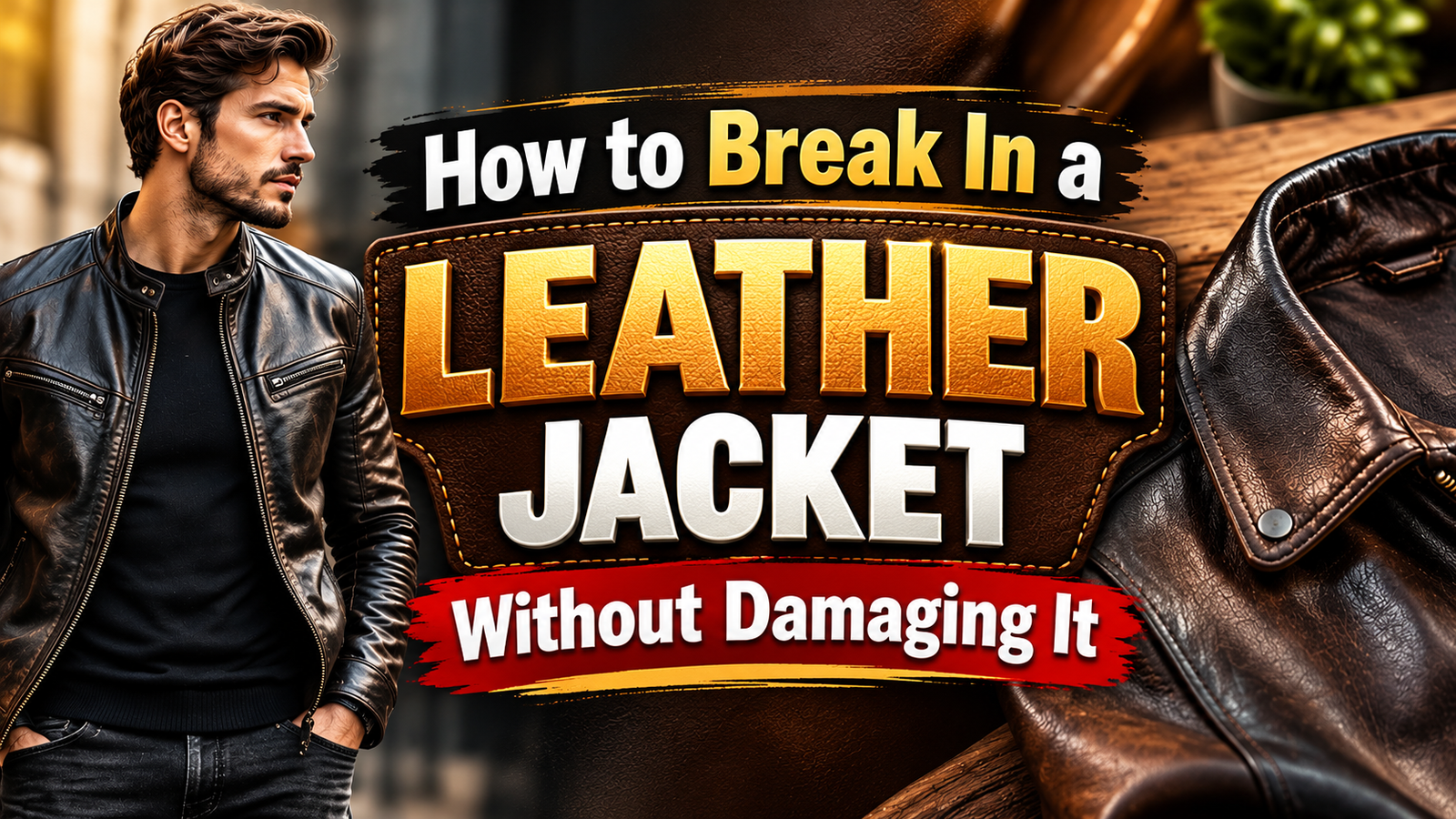
A new leather jacket can look brilliant straight out of the box, yet feel surprisingly rigid when you first put it on. The collar may sit high, the leather jacket sleeves may resist bending, and the leather jacket shoulders can feel more structured than expected. This does not always mean you bought the wrong jacket. In many cases, you simply have a stiff leather jacket that needs time, movement, and sensible leather jacket care.
Learning how to break in a leather jacket is mainly about patience. Good leather changes through regular wear, body warmth, and normal everyday movement. You do not need to soak it, pull it aggressively, or place it near strong heat. In fact, these shortcuts can create problems that ordinary wear would avoid.
The exact leather jacket break-in time depends on the leather type, leather thickness, construction, wearing frequency, and storage conditions. Aero Leather Clothing, for example, explains that some substantial Chromexcel jackets take longer to break in than lighter leathers.
The aim of breaking in a leather jacket is not to turn firm leather into a thin, floppy material. Instead, you want the jacket to become easier and more natural to wear while retaining its shape and character.
Why Does a New Leather Jacket Feel Stiff?
A new leather jacket can feel firm because leather is a structured natural hide rather than a soft knitted fabric. Its initial feel depends on the animal hide, tanning process, leather thickness, treatment, and leather finish. Construction matters too. A jacket with reinforced seams, substantial panels, a strong zipper, and a fitted leather jacket lining may naturally feel more structured.
Weight makes a noticeable difference. A midweight leather jacket will often become comfortable sooner than a heavy leather jacket made from dense horsehide or steerhide. Aero says its Chromexcel Front Quarter Horsehide has a dense fibre structure and a longer break-in period, while some softer hides require little breaking in.
However, leather jacket stiffness should not be confused with poor fit. A firm jacket should still permit reasonable comfortable movement. If the chest causes painful pressure, your arms experience severe restricted movement, or you must force the zipper closed, perform a sizing check. Normal leather jacket stretching cannot reliably correct seriously unsuitable leather jacket sizing.
Check the Leather Type, Fit, and Care Label Before You Start
Before trying to soften a leather jacket, identify the leather jacket material. A smooth leather jacket may require different care from a suede leather jacket or nubuck leather garment. A genuine leather jacket can also behave very differently from a synthetic jacket with a coated surface. This is why the leather jacket care label and official manufacturer instructions should come before generic internet advice.
The same rule applies to leather jacket cleaning and conditioning. Schott N.Y.C. says cleaning and conditioning methods can vary according to the jacket’s materials and recommends testing a treatment on a hidden area before wider application. Your leather jacket fit also deserves attention before you begin. Put on the clothes you normally expect to wear underneath. Check the chest, shoulders, sleeves, collar, and arm movement. If the jacket clearly does not fit, exchanging it is usually wiser than trying to force the leather into a different size.
| Check | What to Look For | Why It Matters |
|---|---|---|
| Leather material | Smooth, suede, nubuck or another finish | Different materials need different care instructions |
| Shoulders | Firm but not painfully tight | Helps separate stiffness from poor fit |
| Sleeves | Normal bending at the elbows | Shows whether you have reasonable flexibility |
| Chest | Jacket closes without excessive force | Helps identify incorrect leather jacket sizing |
| Lining | Smooth and correctly positioned | A twisted lining can restrict movement |
| Care label | Cleaning and conditioning guidance | Helps protect the leather surface and finish |
How to Break In a Leather Jacket Naturally
The safest answer to how to break in a leather jacket is often remarkably simple: wear it. Begin with comfortable periods around the house or during ordinary outings. Walking to the shops, meeting friends, travelling, or completing daily errands allows the jacket to move with you. Your body warmth helps the material feel more pliable, while repeated movement creates natural flex points around your elbows and torso. Aero similarly recommends wearing jackets regularly rather than artificially ageing or distressing them.
Do not treat a leather jacket break-in like an intense stretching session. A few hours of natural use can be more sensible than pulling the jacket in every direction. In the UK’s changeable climate, choose days when you can wear the jacket comfortably. You do not need deliberate water exposure to break it in. The goal is steady regular wear, natural flexibility, and increasing comfort rather than achieving dramatic changes overnight.
Let Body Warmth and Everyday Movement Work Naturally
Your normal movements create repeated bends in the places where a jacket needs them. The elbows bend. The shoulders move when you reach forward. The torso changes shape when you sit. Over time, this repeated motion can make a structured jacket feel more natural.
This process is especially relevant for a substantial motorcycle leather jacket or dense horsehide jacket. These garments may retain a strong structure even after they become comfortable. That is normal. Breaking in should improve movement without destroying the jacket’s original character.
Best Movements and Wearing Techniques to Soften a Leather Jacket
You do not need a special exercise programme to break in leather jacket material. Simply bend your arms normally, walk, sit, reach for ordinary objects, and move as you usually would. These actions allow the leather jacket sleeves and leather jacket shoulders to flex repeatedly without placing sudden stress on the stitching. Natural movement also helps you recognise which areas are becoming easier and which remain uncomfortable.
Avoid aggressive twisting, rolling, crushing, or pulling. These actions may place unnecessary pressure on the leather surface, reinforced seams, hardware, and leather jacket lining. A good rule is simple: if a movement would look strange without the jacket, you probably do not need it for breaking in either. Gentle everyday movement should gradually create the comfortable movement you want.
Read More: David Muir Wife Age
A Simple Wearing Routine
There is no need for a strict timetable. During early wears, use the jacket for comfortable periods and notice how it responds. As it becomes easier to wear, simply make it a normal part of your wardrobe.
A practical example is a person who wears a new jacket during short walks and weekend outings. At first, the elbows may feel firm. After repeated use, bending the arms may become easier because the material has repeatedly flexed at the same points. This is the kind of gradual change you want from breaking in a leather jacket.
Should You Use Leather Conditioner to Speed Up the Break-In Process?
A leather jacket conditioner can be useful in the right circumstances, but it is not automatically necessary for every new jacket. Conditioner primarily supports leather care. It should not be treated as a guaranteed shortcut for breaking in a new garment. Some leather already contains significant oils and waxes when purchased. Adding more product without a reason can change the appearance or feel.
Chromexcel leather provides a useful example. Aero Leather Clothing says its new Chromexcel jackets already contain substantial waxes and oils and therefore generally need little initial care. Aero also recommends testing conditioner on a hidden area because treatment may affect colour. That advice demonstrates why manufacturer instructions matter. Choose leather care products for your specific leather finish, rather than buying a generic product simply because a jacket feels firm.
Can Too Much Conditioner Cause Problems?
Yes. More conditioner does not automatically produce healthier or softer leather. Products can alter colour, texture, shine, or the way a particular finish looks. Different jackets also have different treatment needs.
If conditioning is recommended, use an appropriate product and follow the maker’s directions. Testing a small hidden section first gives you a chance to notice unwanted changes before treating the visible leather surface. Schott also recommends a hidden-area test and allowing time to observe colour and texture changes.
What to Avoid When Breaking In a Leather Jacket
Shortcuts create some of the biggest risks during a leather jacket break-in. Deliberately soaking a jacket, aggressively stretching it, or applying strong direct heat may produce unpredictable results. Moisture can affect different finishes differently, while rapid heat can dry the material. If the jacket becomes wet during normal UK weather, follow its specific care instructions rather than treating rain as a softening technique.
Aero’s cleaning guidance advises air drying a cleaned jacket on a substantial hanger and keeping it away from direct heat, sunlight, and artificial heat sources. It specifically advises against using a hair dryer to accelerate drying. The same cautious approach makes sense during break-in. Keep the jacket away from a radiator and never put it in a tumble dryer. Household cooking oils and body lotions should not replace purpose-made leather care products either.
| Method | Better Approach |
|---|---|
| Deliberately soaking the jacket | Use normal wear and follow official care instructions after accidental rain |
| Using a hair dryer | Allow appropriate air drying |
| Placing it on a radiator | Keep it away from strong direct heat |
| Using a tumble dryer | Never use it as a break-in shortcut |
| Aggressive stretching | Rely on natural everyday movement |
| Household oils | Use only suitable products when required |
| Forcing a tight jacket | Recheck leather jacket fit and sizing |
How Long Does It Take to Break In a Leather Jacket?
People searching how long to break in leather jacket often want an exact number of days or weeks. Unfortunately, no single timeframe works for every jacket. The leather jacket break-in time changes according to the leather type, leather thickness, tanning method, jacket construction, wearing frequency, climate, and storage conditions. Even two jackets that look similar may develop at different speeds.
Aero notes that Chromexcel can require more breaking in than several of its midweight leather options. Some leathers may need little break-in at all. This is why comfort gives you a better benchmark than a calendar. A heavy leather jacket may remain substantial while becoming much easier to wear. Do not assume something has gone wrong simply because your jacket is not extremely soft after several outings.
Leather Thickness and Break-In Time
The relationship between leather thickness and break-in is easy to understand. A dense, substantial material usually resists folding more than a thin, supple material. Construction and tanning also matter, so thickness alone cannot predict an exact timeframe.
Aero lists its Chromexcel Front Quarter Horsehide at around 1.4 mm and Chromexcel Steerhide at around 1.7 mm as general measurements. It also notes differences in fibre structure and break-in behaviour. These examples show why judging every leather jacket by the same timetable is misleading.
Signs Your Leather Jacket Is Breaking In Properly
The clearest signs appear during normal use. Your elbows may bend with less resistance. The collar may sit more naturally. Your leather jacket shoulders can feel easier during reaching movements, while the jacket begins to follow your body rather than fighting every motion. These are practical signs that flexibility is developing through normal use.
You should also know what is not a healthy sign. Broken stitching, peeling surfaces, damaged hardware, persistent painful pressure, or serious restricted movement deserve attention. Do not automatically call these issues part of breaking in. If you are unsure whether a change is normal, stop experimenting and speak with the manufacturer or a qualified leather care specialist.
Healthy Break-In vs Possible Damage
| Healthy Change | Possible Problem |
|---|---|
| Easier elbow movement | Torn stitching |
| More natural shoulder movement | Persistent painful tightness |
| Gradual creasing | Peeling or unusual surface damage |
| Improved comfort | Damaged zipper |
| Leather moving naturally with you | Torn or twisted lining |
| Character developing with wear | Major unwanted colour change after treatment |
How to Keep Your Leather Jacket Soft and Comfortable After Break-In
Good leather jacket maintenance matters after the initial break-in period. Store the jacket on a strong, suitable hanger that supports the shoulders. Give it enough space in the wardrobe and protect it from unnecessary sunlight, high humidity, and heat. Aero recommends a robust, wide hanger and advises keeping leather away from direct sunlight, heat, and excessive humidity during storage.
Your approach to leather jacket cleaning should remain conservative. Follow the leather jacket care label and product-specific instructions rather than washing simply because the jacket has been worn frequently. Conditioning should also reflect the actual material and its condition. If you encounter difficult stains, damaged stitching, lining problems, or a broken zipper, professional advice from a leather care specialist may be safer than experimenting at home.
Caring for Leather in UK Weather
British weather can change quickly, so occasional rain may be difficult to avoid. Accidental moisture is different from deliberately soaking a jacket to make it softer. If your jacket gets wet, check the manufacturer’s directions for that particular material.
Where suitable, allow the garment to dry naturally rather than placing it beside a heater. Aero’s guidance for its jackets recommends drying away from direct heat and sunlight. Remember that a suede leather jacket, nubuck leather, and a finished smooth leather jacket may have different requirements. Material-specific advice should always win over a universal internet trick.
Conclusion
Learning how to break in a leather jacket does not require extreme methods. Start by checking the leather jacket material, leather jacket care label, and leather jacket fit. Then use regular wear, body warmth, and gentle everyday movement to let the jacket adapt naturally.
Do not rush breaking in a leather jacket with deliberate soaking, aggressive leather jacket stretching, a hair dryer, radiator, tumble dryer, or unsuitable household products. Use a leather jacket conditioner only when it is appropriate for the specific material and finish. Follow official manufacturer instructions whenever possible.
Most importantly, do not become obsessed with leather jacket break-in time. A lighter jacket may settle quickly, while a substantial motorcycle leather jacket or heavy leather jacket can take much longer. What matters is gradual improvement in comfort and flexibility, not reaching an arbitrary deadline.
Treat your jacket well and allow it to develop naturally. Good leather jacket care and sensible leather jacket maintenance can preserve the material while allowing the garment to become more comfortable and personal with wear.
FAQs
How long does it take to break in a leather jacket?
Most leather jackets soften gradually with regular wear. The exact time depends on the leather type, thickness, fit, and how often you wear it.
What is the safest way to break in a leather jacket?
Wear your jacket regularly and allow normal body movement to soften it naturally. Avoid aggressive stretching, soaking, or direct heat.
Can I use leather conditioner to soften a new leather jacket?
Yes, but only if the conditioner is suitable for your specific leather. Always check the care label and manufacturer’s instructions first.
Does a leather jacket get softer over time?
Yes, genuine leather usually becomes more flexible and comfortable with regular use. Heavier leather may take longer to soften than lighter leather.
One thought on “How to Break In a Leather Jacket Without Damaging It”